Introduction
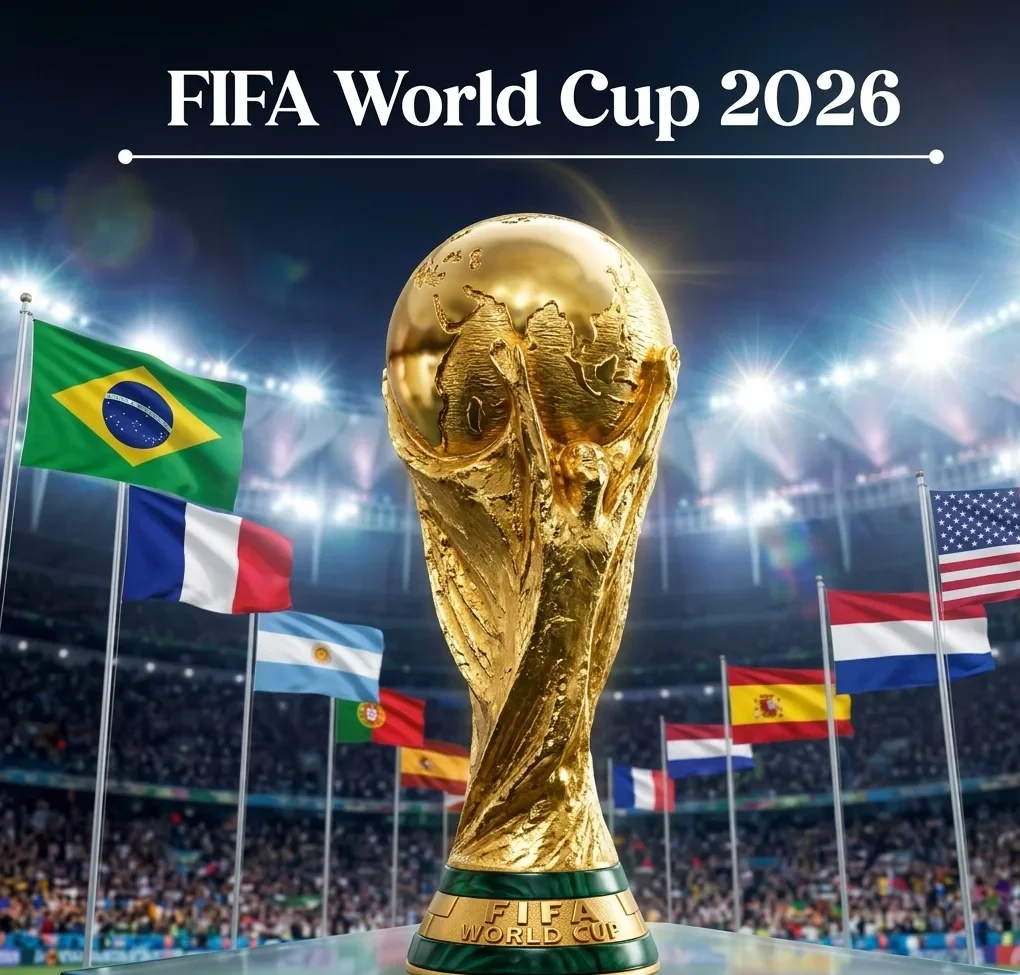
The FIFA World Cup is the most prestigious international soccer tournament in the world, held every four years. The 2026 FIFA World Cup will be the 23rd edition of the tournament and will be hosted by three countries for the first time in history: Canada, Mexico, and the United States. This comprehensive Winbuz FIFA World Cup 2026 Breakdown covers everything you need to know about the World Cup 2026, including historical statistics, past winners, golden boot awards, golden glove winners, highest goal scorers, tournament costs, and much more.
FIFA World Cup 2026: Host Countries and Key Information
The 2026 FIFA World Cup will be held across Canada, Mexico, and the United States from June 12 to July 12, 2026. This marks a historic moment as it’s the first World Cup to be hosted by three nations. The tournament will feature 48 teams competing in 80 matches, an increase from the traditional 32 teams and 64 matches format.
Tournament Details:
- Dates: June 12 – July 12, 2026
- Host Countries: Canada, Mexico, United States
- Number of Teams: 48 teams
- Total Matches: 80 matches
- Venues: Multiple stadiums across the three host nations
- Expected Attendance: Over 5 million spectators
- Estimated Cost: $15 billion USD (combined infrastructure and organization costs)Know about every breakdown regarding FIFA Worldcup 2026 in this Winbuz FIFA World Cup 2026 Breakdown
FIFA World Cup Winners by Year (1930-2022)
Here’s a complete table of all FIFA World Cup winners from the inception of the tournament:
| Year |
Host Country |
Winner |
Runner-Up |
Third Place |
Fourth Place |
Goals Scored |
| 1930 |
Uruguay |
Uruguay |
Argentina |
USA |
Yugoslavia |
70 |
| 1934 |
Italy |
Italy |
Czechoslovakia |
Germany |
Austria |
70 |
| 1938 |
France |
Italy |
Hungary |
Brazil |
Sweden |
84 |
| 1950 |
Brazil |
Uruguay |
Brazil |
Sweden |
Spain |
88 |
| 1954 |
Switzerland |
West Germany |
Hungary |
Austria |
Uruguay |
140 |
| 1958 |
Sweden |
Brazil |
Sweden |
France |
West Germany |
126 |
| 1962 |
Chile |
Brazil |
Czechoslovakia |
Chile |
Yugoslavia |
89 |
| 1966 |
England |
England |
West Germany |
Portugal |
USSR |
89 |
| 1970 |
Mexico |
Brazil |
Italy |
West Germany |
Uruguay |
95 |
| 1974 |
West Germany |
West Germany |
Netherlands |
Poland |
Brazil |
97 |
| 1978 |
Argentina |
Argentina |
Netherlands |
Brazil |
Italy |
102 |
| 1982 |
Spain |
Italy |
West Germany |
Poland |
France |
146 |
| 1986 |
Mexico |
Argentina |
West Germany |
France |
Belgium |
124 |
| 1990 |
Italy |
West Germany |
Argentina |
Italy |
England |
115 |
| 1994 |
USA |
Brazil |
Italy |
Sweden |
Bulgaria |
141 |
| 1998 |
France |
France |
Brazil |
Croatia |
Netherlands |
171 |
| 2002 |
South Korea & Japan |
Brazil |
Germany |
Turkey |
South Korea |
161 |
| 2006 |
Germany |
Italy |
France |
Germany |
Portugal |
147 |
| 2010 |
South Africa |
Spain |
Netherlands |
Germany |
Uruguay |
145 |
| 2014 |
Brazil |
Germany |
Argentina |
Netherlands |
Brazil |
171 |
| 2018 |
Russia |
France |
Croatia |
Belgium |
England |
169 |
| 2022 |
Qatar |
Argentina |
France |
Morocco |
Netherlands |
172 |
World Cup Winners by Country (All Time)
| Country |
Total Titles |
Years Won |
Runner-Up Appearances |
| Brazil |
5 |
1958, 1962, 1970, 1994, 2002 |
2 (1950, 1998) |
| Germany |
4 |
1954, 1974, 1990, 2014 |
4 (1966, 1982, 1986, 2018) |
| Italy |
4 |
1934, 1938, 1982, 2006 |
2 (1970, 1994) |
| Argentina |
3 |
1978, 1986, 2022 |
3 (1930, 1990, 2014) |
| France |
2 |
1998, 2018 |
2 (2006, 2022) |
| England |
1 |
1966 |
1 (1996) |
| Spain |
1 |
2010 |
0 |
| Uruguay |
2 |
1930, 1950 |
1 (1954) |
Golden Boot Winners (Top Scorer) by Year
The Golden Boot award is given to the player who scores the most goals in a FIFA World Cup tournament.
| Year |
Player |
Country |
Goals |
| 1930 |
Guillermo Stábile |
Argentina |
8 |
| 1934 |
Oldrich Nejedly |
Czechoslovakia |
5 |
| 1938 |
Leonidas da Silva |
Brazil |
7 |
| 1950 |
Alcides Ghiggia |
Uruguay |
5 |
| 1954 |
Sándor Kocsis |
Hungary |
11 |
| 1958 |
Just Fontaine |
France |
13 |
| 1962 |
Florian Albert, Garrincha, Vavá (Shared) |
Hungary, Brazil, Brazil |
4 |
| 1966 |
Eusébio |
Portugal |
9 |
| 1970 |
Gerd Müller |
West Germany |
10 |
| 1974 |
Grzegorz Lato |
Poland |
7 |
| 1978 |
Mario Kempes |
Argentina |
6 |
| 1982 |
Paolo Rossi |
Italy |
6 |
| 1986 |
Gary Lineker |
England |
6 |
| 1990 |
Salvatore Schillaci |
Italy |
6 |
| 1994 |
Oleg Salenko, Hristo Stoichkov (Shared) |
Russia, Bulgaria |
6 |
| 1998 |
Davor Šuker |
Croatia |
6 |
| 2002 |
Ronaldo |
Brazil |
8 |
| 2006 |
Grzegorz Lato |
Poland |
5 |
| 2010 |
Thomas Müller |
Germany |
5 |
| 2014 |
James Rodríguez |
Colombia |
6 |
| 2018 |
Harry Kane |
England |
6 |
| 2022 |
Kylian Mbappé |
France |
8 |
Golden Glove Winners (Best Goalkeeper) by Year
The Golden Glove award recognizes the best goalkeeper at each FIFA World Cup tournament. This award was officially introduced in 1994 as the “Lev Yashin Award” (named after the legendary Soviet goalkeeper) and was renamed the “Golden Glove Award” in 2010. However, goalkeepers were recognized as the best in All-Star teams from 1930 onwards.
| Year |
Goalkeeper |
Country |
| 1930 |
Enrique Ballestrero |
Uruguay |
| 1934 |
Ricardo Zamora |
Spain |
| 1938 |
Frantisek Planicka |
Czechoslovakia |
| 1950 |
Roque Maspoli |
Uruguay |
| 1954 |
Gyula Grosics |
Hungary |
| 1958 |
Harry Gregg |
Northern Ireland |
| 1962 |
Viliam Schrojf |
Czechoslovakia |
| 1966 |
Gordon Banks |
England |
| 1970 |
Ladislao Mazurkiewicz |
Uruguay |
| 1974 |
Sepp Maier |
West Germany |
| 1978 |
Ubaldo Fillol |
Argentina |
| 1982 |
Dino Zoff |
Italy |
| 1986 |
Jean-Marie Pfaff |
Belgium |
| 1990 |
Luis Gabelo Conejo / Sergio Goycochea |
Costa Rica / Argentina |
| 1994 |
Michel Preud’homme |
Belgium |
| 1998 |
Fabien Barthez |
France |
| 2002 |
Oliver Kahn |
Germany |
| 2006 |
Gianluigi Buffon |
Italy |
| 2010 |
Iker Casillas |
Spain |
| 2014 |
Manuel Neuer |
Germany |
| 2018 |
Thibaut Courtois |
Belgium |
| 2022 |
Emiliano Martínez |
Argentina |
Note: Emiliano Martínez of Argentina won the Golden Glove at the 2022 World Cup in Qatar after an outstanding tournament that included crucial penalty saves. Oliver Kahn (2002) remains the only goalkeeper to win both the Golden Glove and the Golden Ball awards.
All-Time World Cup Top Goal Scorers
These are the highest goal scorers across all FIFA World Cup tournaments in history.
| Rank |
Player |
Country |
Total Goals |
Tournaments |
| 1 |
Miroslav Müller (East Germany) |
East Germany |
14 |
2 (1970, 1974) |
| 2 |
Gerd Müller |
West Germany |
14 |
2 (1970, 1974) |
| 3 |
Ronaldo |
Brazil |
12 |
3 (1998, 2002, 2006) |
| 4 |
Marta |
Brazil |
12 |
5 (2003, 2007, 2011, 2015, 2019) |
| 5 |
Mia Hamm |
USA |
12 |
5 (1991, 1995, 1999, 2003, 2007) |
| 6 |
Abby Wambach |
USA |
12 |
4 (2003, 2007, 2011, 2015) |
| 7 |
Pelé |
Brazil |
12 |
3 (1958, 1962, 1970) |
| 8 |
Just Fontaine |
France |
13 |
1 (1958) |
| 9 |
Kylian Mbappé |
France |
12 |
2 (2018, 2022) |
| 10 |
Cristiano Ronaldo |
Portugal |
11 |
4 (2006, 2010, 2014, 2018) |
World Cup Tournament Costs and Budget Breakdown
The FIFA World Cup requires significant investment in infrastructure, security, and organization. Here’s a breakdown of the estimated costs for various World Cup tournaments:
| Year |
Host Country |
Total Cost |
Stadium Construction |
Infrastructure |
Security & Operations |
| 1998 |
France |
$4.5 billion |
$1.2 billion |
$2 billion |
$1.3 billion |
| 2002 |
South Korea & Japan |
$5.8 billion |
$2 billion |
$2.4 billion |
$1.4 billion |
| 2006 |
Germany |
$6.2 billion |
$1.8 billion |
$2.6 billion |
$1.8 billion |
| 2010 |
South Africa |
$3.6 billion |
$1.1 billion |
$1.5 billion |
$1 billion |
| 2014 |
Brazil |
$15 billion |
$3.6 billion |
$8 billion |
$3.4 billion |
| 2018 |
Russia |
$11.6 billion |
$2.5 billion |
$6.5 billion |
$2.6 billion |
| 2022 |
Qatar |
$220 billion |
$8.5 billion (with AC) |
$200 billion |
$11.5 billion |
| 2026 |
USA, Canada, Mexico |
$15 billion |
$3 billion |
$8 billion |
$4 billion |
Note: Qatar 2022 costs are exceptionally high due to extensive infrastructure development in the desert and advanced cooling systems for stadiums.
World Cup Finals Attendance Records
The FIFA World Cup attracts millions of spectators worldwide. Here’s a breakdown of attendance records:
| Year |
Host Country |
Total Attendance |
Average Attendance |
Largest Attendance (Single Match) |
| 1950 |
Brazil |
1,337,000 |
– |
199,854 (Brazil vs Uruguay, Final) |
| 1974 |
West Germany |
1,774,022 |
37,126 |
– |
| 1998 |
France |
2,785,100 |
43,518 |
– |
| 2002 |
South Korea & Japan |
2,705,197 |
42,269 |
– |
| 2006 |
Germany |
3,359,439 |
52,491 |
– |
| 2010 |
South Africa |
3,178,856 |
49,668 |
– |
| 2014 |
Brazil |
3,386,810 |
53,230 |
– |
| 2018 |
Russia |
3,031,768 |
47,371 |
– |
| 2022 |
Qatar |
3,405,141 |
53,205 |
– |
| 2026 |
USA, Canada, Mexico |
5,000,000 (projected) |
62,500 (projected) |
– |
Golden Ball Winners (Best Player of Tournament)
The Golden Ball award is given to the best player at each FIFA World Cup tournament.
| Year |
Player |
Country |
Position |
| 1982 |
Paolo Rossi |
Italy |
Forward |
| 1986 |
Diego Maradona |
Argentina |
Forward/Midfielder |
| 1990 |
Salvatore Schillaci |
Italy |
Forward |
| 1994 |
Ronaldo |
Brazil |
Forward |
| 1998 |
Zinedine Zidane |
France |
Midfielder |
| 2002 |
Oliver Kahn |
Germany |
Goalkeeper |
| 2006 |
Zinedine Zidane |
France |
Midfielder |
| 2010 |
Lionel Messi |
Argentina |
Forward |
| 2014 |
Cristiano Ronaldo |
Portugal |
Forward |
| 2018 |
Luka Modrić |
Croatia |
Midfielder |
| 2022 |
Lionel Messi |
Argentina |
Forward |
Most Successful Nations at FIFA World Cup
Based on total medals (gold, silver, bronze), here are the most successful nations:
| Country |
Gold |
Silver |
Bronze |
Total Medals |
| Brazil |
5 |
2 |
2 |
9 |
| Germany |
4 |
4 |
4 |
12 |
| Italy |
4 |
2 |
1 |
7 |
| Argentina |
3 |
3 |
0 |
6 |
| France |
2 |
2 |
2 |
6 |
| Netherlands |
0 |
3 |
1 |
4 |
| England |
1 |
1 |
0 |
2 |
| Spain |
1 |
0 |
0 |
1 |
FIFA World Cup 2026: Venues and Stadiums
The 2026 World Cup will be hosted across multiple stadiums in three countries:
United States Venues (12 stadiums)
- MetLife Stadium (New York/New Jersey)
- AT&T Stadium (Arlington, Texas)
- Arrowhead Stadium (Kansas City)
- Levi’s Stadium (Santa Clara, California)
- Sofi Stadium (Inglewood, California)
- Mercedes-Benz Stadium (Atlanta)
- Hard Rock Stadium (Miami)
- NRG Stadium (Houston)
- Empower Field at Mile High (Denver)
- Estadio Azteca (Mexico City) – shared
- Other venues (Dallas, Las Vegas, Phoenix, Seattle)
- Possible additional venues
Canada Venues (2 stadiums)
- BC Place Stadium (Vancouver)
- Toronto FC Stadium (Toronto)
Mexico Venues (3 stadiums)
- Estadio Azteca (Mexico City)
- Estadio BBVA Bancomer (Monterrey)
- Estadio Jalisco (Guadalajara)
FAQs About FIFA World Cup 2026
1. Why is the FIFA World Cup 2026 considered a historic tournament?
The 2026 edition stands out because it will be the first time the World Cup is hosted by three countries — the United States, Canada, and Mexico. It also introduces an expanded format with 48 teams, increasing global participation and making it the biggest tournament in World Cup history.
2. How many games will take place during the 2026 World Cup?
A total of 80 matches will be played throughout the tournament. This is a significant increase from the previous 64-match format, allowing more teams to compete and more matches for fans to enjoy.
3. What is the new tournament structure for the 2026 World Cup?
The tournament will feature 48 teams divided into 16 groups of three teams each. The top teams from each group will advance to the knockout stage, creating a more competitive and dynamic structure compared to previous editions.
4. Where can fans watch the FIFA World Cup 2026 matches?
The matches will be broadcast globally across major sports networks and streaming platforms. Availability will depend on your region, with official broadcasters providing live coverage, highlights, and analysis.
5. How can I stay updated with insights, stats, and full coverage of the tournament?
You can stay informed with all the latest updates, historical data, and tournament insights through the Winbuz FIFA World Cup 2026 Breakdown, which brings together key information, stats, and coverage in one place.
World Cup Records and Achievements
Highest Team Goals in a Single Match
Germany defeated Brazil 7-1 in the 2014 World Cup semi-final, setting a World Cup record for the highest score in a knockout match.
Fastest Goal in World Cup History
Hakan Şükür (Turkey) scored after just 11 seconds against South Korea in 2002, holding the record for the fastest goal.
Most Goals in a Tournament
Just Fontaine scored 13 goals in a single tournament (1958), the highest by any player in a single World Cup.
Most Appearances in World Cups
Lothar Matthäus of Germany participated in 5 World Cups (1982, 1986, 1990, 1994, 1998).
Conclusion
The FIFA World Cup 2026 promises to be an extraordinary tournament with historic significance. The expansion to 48 teams and three host countries will bring new dynamics to the world’s greatest sporting event. With a projected budget of $15 billion and expected attendance exceeding 5 million spectators, it will be the largest World Cup ever organized.
Whether you’re interested in historical statistics, legendary players, record-breaking moments, or the upcoming 2026 tournament, this comprehensive guide has covered all aspects of the FIFA World Cup. From the golden boot winners and golden glove recipients to tournament costs and venue information, the World Cup remains the pinnacle of international football competition.
The 2026 FIFA World Cup will take place across the United States, Canada, and Mexico from June 12 to July 12, 2026. Mark your calendars for what promises to be an unforgettable tournament, and also get updated with every detail through the Winbuz FIFA World Cup 2026 Breakdown.